 Barcode Next
ITF-14 barcode
Generate ITF-14 shipping and packaging barcodes with GTIN validation, sizing controls and print-ready vector output.
Outer cases and shipping cartons identified with GTIN-14
What is ITF-14?
ITF-14 is commonly used to encode GTIN-14 identifiers on shipping containers, cartons and outer packaging. It is based on Interleaved 2 of 5 and is designed for reliable scanning on packaging materials that may not provide the same print quality as retail labels.
Depending on the printing method and packaging specification, ITF-14 symbols may use bearer bars around the barcode. It is commonly printed directly on outer cases rather than intended for conventional point-of-sale scanning. The packaging material and printing process can influence the required size and bearer-bar treatment.
Data requirements
ITF-14 encodes exactly fourteen numeric digits, including a mandatory GTIN-14 Modulo 10 check digit. The final GTIN check digit is calculated from the preceding thirteen digits. It confirms numerical consistency, but it cannot establish that the GTIN-14 is assigned to the correct packaging level or trade item.
Structure and sizing
Interleaved 2 of 5 patterns encode digits in pairs. Clear quiet zones are required; bearer bars may be specified for the intended carton material and print method. Bar patterns encode numeric pairs by interleaving information in bars and spaces. Depending on the print method, bearer bars help compensate for production tolerances, particularly on corrugated materials, while quiet zones must remain unobstructed.
Technical specifications
- Data
- 14 digits including the GTIN check digit
- Encoding
- Interleaved 2 of 5-based
- Data length
- Fixed 14-digit GTIN
- Check digit
- Mandatory, GS1 Modulo 10
- Bearer bars
- Used for print-quality protection under specified conditions
- Standard
- GS1 General Specifications
- Example GTIN-14
- 10012345678902
ITF-14 in Barcode Next
Carton printing and bearer bars
ITF-14 is designed for logistics packaging, typically outer cases rather than consumer point-of-sale labels. Its fixed-length numeric payload includes a GTIN-14 check digit.
Bearer bars are used in applications such as direct printing on corrugated board, helping reduce problems from printing pressure. Their configuration depends on the printing method and GS1 requirements.
Printing on corrugated material may impose different magnification and quality constraints from labels printed on smooth paper.

Batch generation
Import CSV or XLSX data, validate individual records and generate multiple barcodes in one workflow.

Vector and raster export
Export scalable SVG, PDF or EPS files and high-resolution PNG, JPEG or TIFF images for production.

Label printing
Arrange barcodes on label sheets using presets or custom paper sizes, margins and grid layouts.
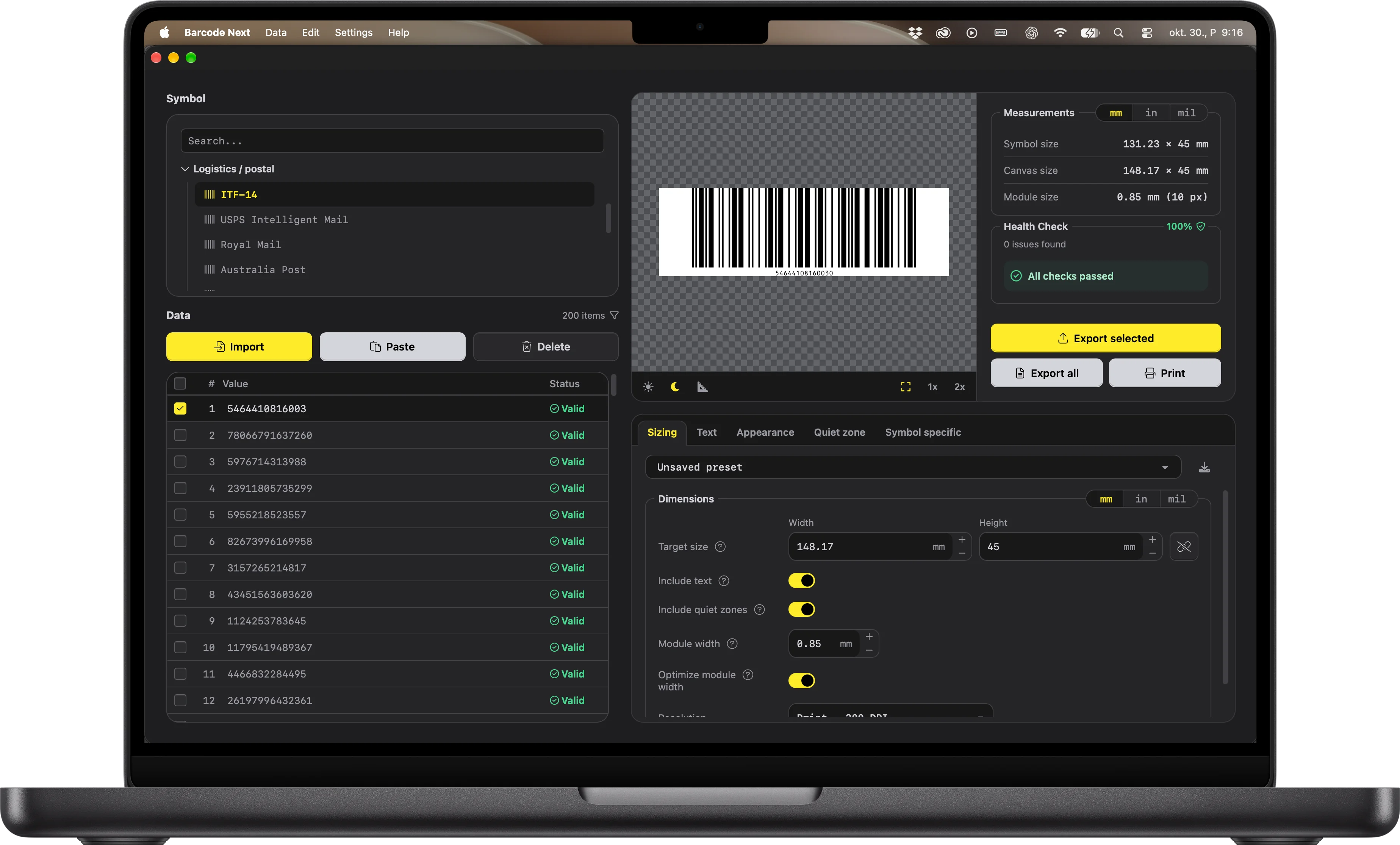
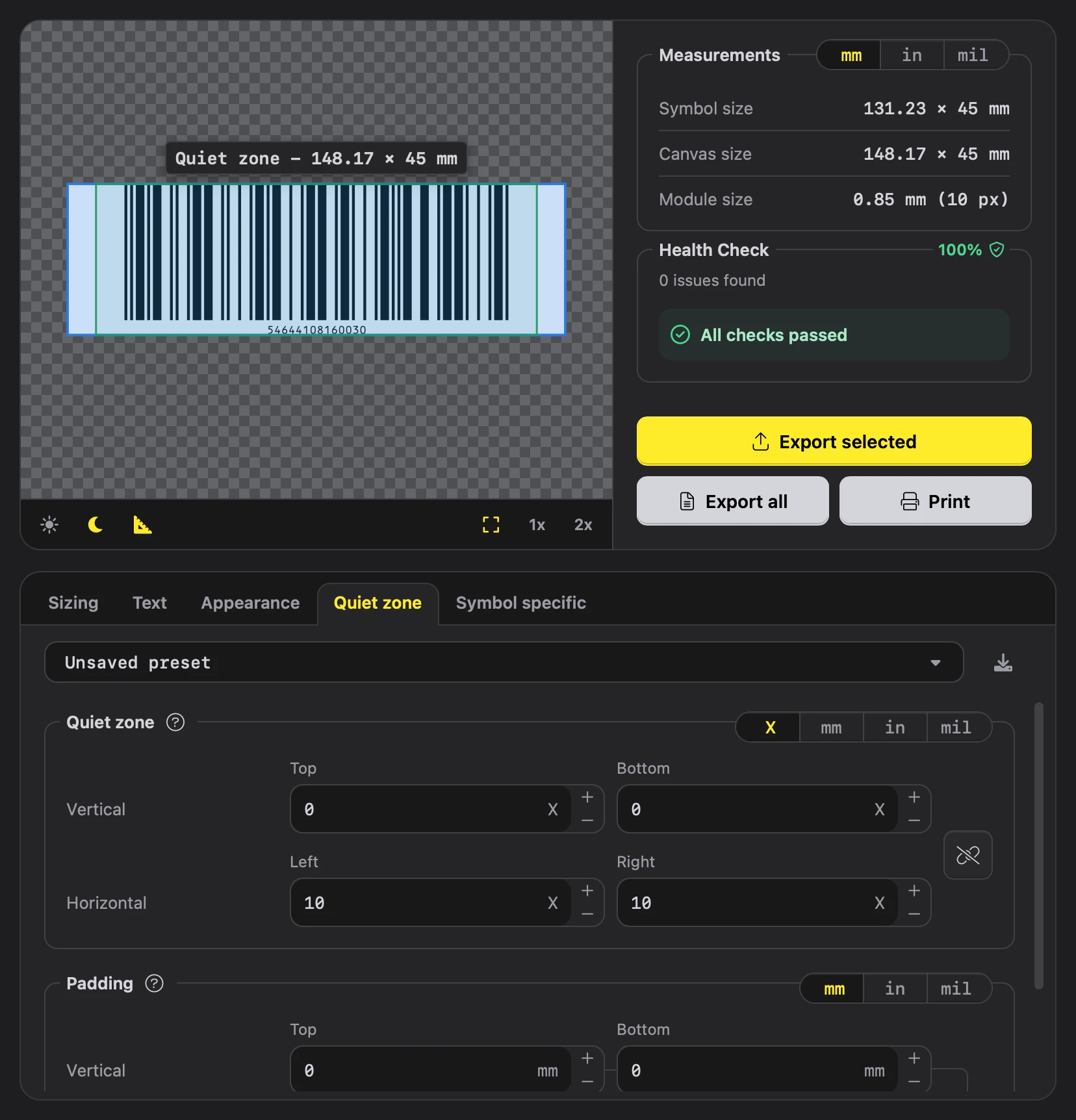
Available options depend on the selected symbology. The screenshot illustrates shared application controls, not a verified scan result for ITF-14.
Common issues and print considerations
Treating ITF-14 as EAN-13
Although both can identify trade items, the barcode structures and typical scanning environments differ.
Ignoring packaging material
Printing method, surface and bearer bars can affect the quality of the final symbol.
Technical basis: GS1 General Specifications, release 26.0 (2026). Application and print specifications can impose additional requirements.
ITF-14 questions
How many digits does ITF-14 encode?
Fourteen numeric digits, including the mandatory GTIN check digit.
What are ITF-14 bearer bars?
Additional bars around the symbol used to support reliable production and scanning in specified printing workflows.
Create ITF-14 with Barcode Next
Work with format-specific data rules, precise dimensions, validation and clear previews in a professional barcode editor for Mac and Windows.
Explore all features or compare the Mac and Windows editions.
Get started with Barcode Next
Download for free
Explore barcode formats, customize QR codes, prepare batches and preview label layouts.
Download